

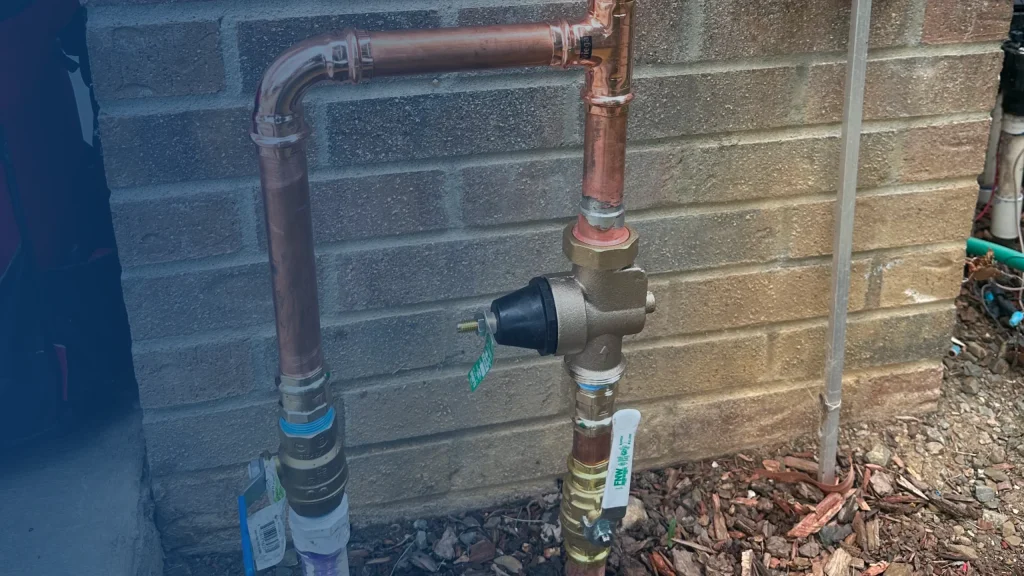

Water Pressure Regulator Installation in Sacramento, CA
Banging pipes, a toilet that keeps running, a water heater relief valve that drips. High water pressure wears out every fixture in the house. We measure your pressure, install or replace the regulator, and set it to a safe level.



What a Pressure Regulator Does and When You Need One
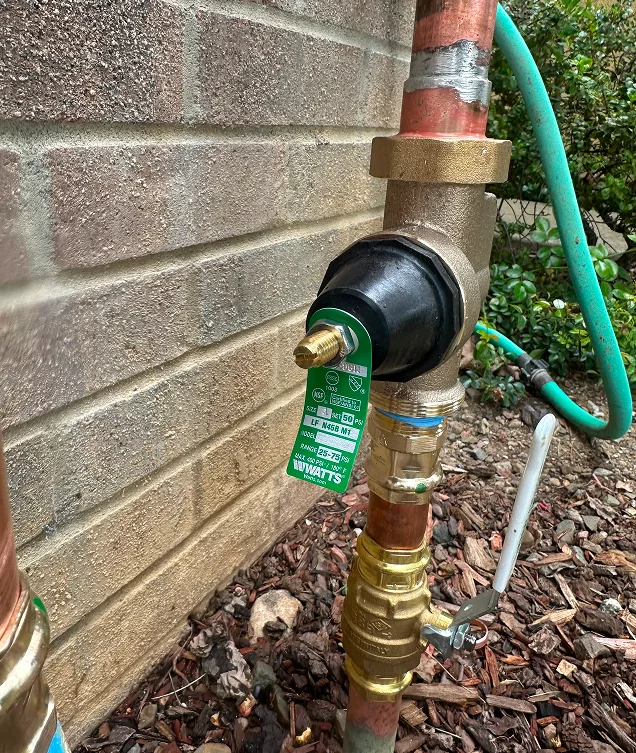
A water pressure regulator, also called a pressure reducing valve or PRV, sits on the main water line where it enters the house. It takes the pressure coming in from the street and lowers it to a level your pipes, fixtures, and appliances are built for.
California plumbing code requires a regulator when the static pressure in your water supply is above 80 psi, and it requires an expansion tank on the cold water line after the regulator. Most homes run well at about 50 to 60 psi. Some older homes never had a regulator, and the ones that do wear out, usually within 5 to 10 years.
Signs your pressure is too high or the regulator is failing:
- Pipes bang or hammer when a faucet or appliance shuts off
- Toilets run or refill on their own
- The water heater relief valve drips or discharges
- Faucets and showerheads spray hard, or the pressure surges and drops
- Supply lines, valves, and appliance hoses fail early
How We Install a Pressure Regulator
We measure first, so you know whether you need a new regulator, an adjustment, or nothing at all.
Test the pressure
Install or replace the regulator
Check thermal expansion
Set and verify
Adjust, Clean, or Replace?
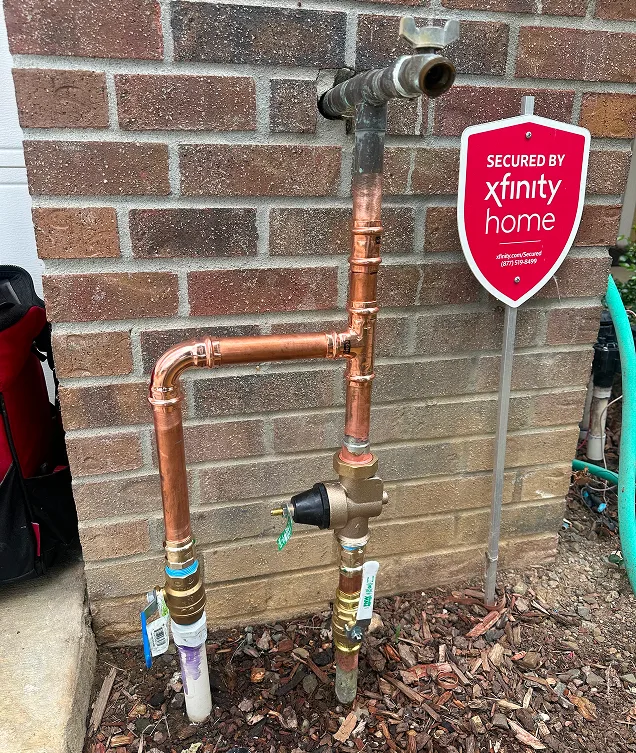
Not every pressure problem needs a new valve. Sometimes the regulator only needs an adjustment, or its strainer is packed with sediment. When the valve itself has worn out, the pressure creeps back up or swings, and an adjustment no longer holds. At that point, replacement is the fix that lasts.
Low pressure is a different problem. If the whole house is weak, the cause can be a regulator stuck partly closed, a main valve that is not fully open, or corroded pipe. We test before we recommend anything. If the real issue is old or failing pipe, we explain the options, from a pipe leak repair to whole-home repiping.
Why 5-Star
Why Homeowners Call 5-Star Plumbing
In-House Licensed Technicians
Upfront Flat-Rate Pricing
Installed to Code
1-Year Labor Warranty
Trusted by 6,000+ Sacramento County Homeowners
5-Star Plumbing Inc holds 4,800+ Google reviews and 1,100+ on Yelp. Read what homeowners say about their plumbing service below.


Water Pressure Regulator Questions, Answered
- What should my home water pressure be?
Most homes run best at about 50 to 60 psi. California plumbing code requires a regulator when the static pressure coming in is above 80 psi, and the regulator brings it down to 80 psi or less.
- How long does a water pressure regulator last?
Most last about 5 to 10 years. Hard water and sediment can shorten that, which is why a regulator that worked for years can start letting the pressure creep back up.
- How can I check my water pressure?
You can check it with a hose-bib gauge from a hardware store. Screw it onto an outdoor faucet near the main line, make sure no water is running in the house, and read the gauge. A reading above 80 psi means the regulator needs attention.
- Do I need an expansion tank with a pressure regulator?
Yes, in most cases you do. A regulator keeps water from flowing back to the street, so the water heater has nowhere to push the extra volume when the water heats up. Code calls for an expansion tank on the cold water line after the regulator.
- Can you adjust my regulator instead of replacing it?
Yes, if the valve still works. We test it first. If an adjustment holds steady on the gauge, that is all you need. If the pressure creeps or swings after an adjustment, the valve has worn out, and replacement is the lasting fix.
- Where is the pressure regulator in my house?
It is usually on the main water line near where it enters the house, often next to the main shutoff or an outdoor faucet. In some homes it sits closer to the meter.
- Is high water pressure an emergency?
No, it usually is not, but it should not wait long. High pressure strains every joint and appliance hose in the house. If a supply line has already burst or water is spraying, shut off the main valve and call us right away.
What to Expect on Your Regulator Visit
Call or send a photo
Flat-rate quote
We install and set it
Your numbers before and after
Pipes Banging or Water Heater Dripping?
Get a flat-rate quote for water pressure regulator installation across Sacramento County. We measure your pressure, fix what is wrong, and show you the reading before we leave.