


Gas Line Installation & Repair in Sacramento County
Gas line work is not a DIY project and not a job for a general handyman. It requires a licensed contractor, city permits, and a pressure test that proves every joint is sealed before the gas is turned back on. 5-Star Plumbing Inc installs, repairs, and replaces residential gas lines across Sacramento County under CSLB license #1038276 — with classifications in both general building (B) and plumbing (C36). We handle everything from a single appliance hookup to a complete gas repipe.
Signs You Need a Gas Line Professional
Gas leaks are serious. They’re also more common than most homeowners realize — especially in older Sacramento homes with aging black iron pipe and threaded fittings that loosen over decades. Watch for these signs:
- The smell of rotten eggs or sulfur near a gas appliance, at a wall, or in the yard.
- A hissing or whistling sound near a gas line or connection.
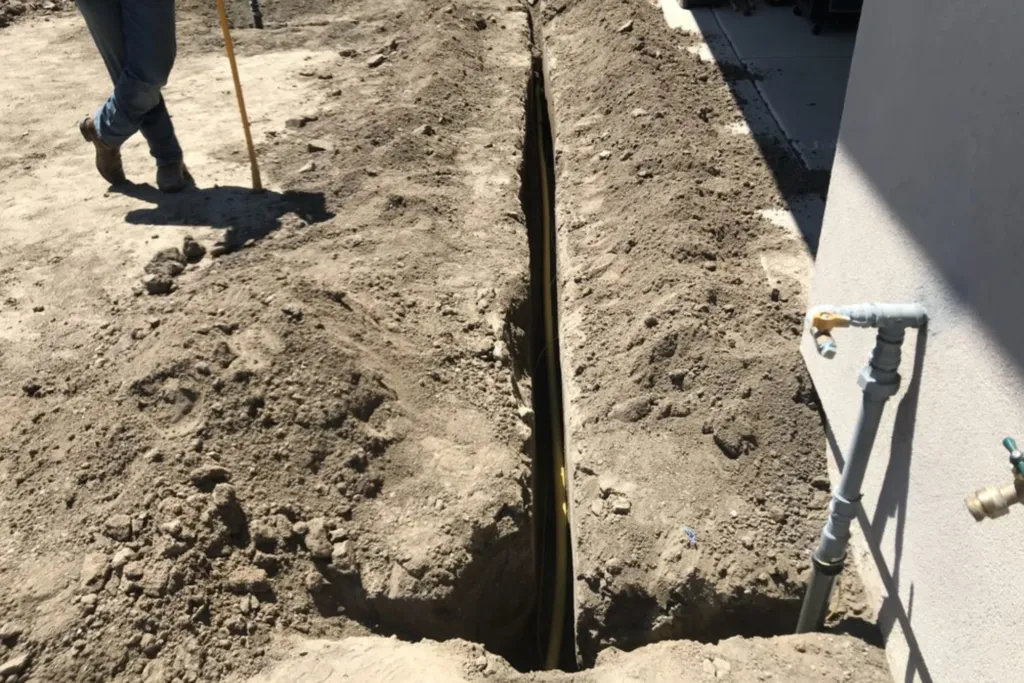
- Dead or dying vegetation in a line above where a buried gas line runs.
- A gas bill that’s higher than expected with no change in usage.
- A yellow or orange burner flame instead of the normal blue.
- PG&E or SMUD has flagged a failed pressure test on your system.
- You’re adding a new gas appliance (range, dryer, fireplace, outdoor grill, pool heater) and need a new line run.
If you smell gas strongly inside your home, leave the house immediately, don’t flip any switches, and call your gas utility’s emergency line first. Once the immediate danger is cleared, call us to diagnose and fix the source.
From a Single Appliance Line to a Complete Gas Repipe
Gas line work ranges from a quick hookup to a full-system overhaul. Here’s what we handle:
New Gas Line Installation
Gas Line Repair
Whole-Home Gas Repiping
Gas Leak Detection & Pressure Testing
What to Expect — From Assessment to Pressure Test
Gas line work requires precision and zero shortcuts. Here’s how every gas project works with 5-Star Plumbing:
System Assessment
Flat-Rate Quote
Permits & Coordination
Installation & Pressure Test
City Inspection & Gas Turn-On


Why Sacramento Homeowners Trust Us With Their Gas Lines
Licensed and Permitted
Pressure-Tested, Every Time
Upfront Flat-Rate Pricing
In-House Technicians Only
Financing & Referral Program

Flexible Payment Options



Our Referral Program
Flexible Payment Options
Smell Gas? Need a New Line? Don’t Wait.
Call us 24/7 for emergency gas line service, or request a quote online for planned installations.
Gas Line Questions — Straight Answers
- I smell gas in my house. What should I do?
Leave the house immediately. Don’t flip light switches, use phones inside, or start your car in the garage. Once you’re outside, call your gas utility’s emergency line (PG&E: 1-800-743-5000 or SMUD’s gas partner). After the immediate danger is cleared, call us to locate and repair the leak.
- Do I need a permit to add a gas line for a new stove or outdoor grill?
Yes. Any new gas line or modification to an existing gas system requires a city permit in Sacramento County. We pull the permit, do the work, schedule the inspection, and make sure it passes. This protects your homeowner’s insurance and ensures the installation is safe and legal.
- What is a gas pressure test, and why does it matter?
After any gas line work, we seal the system and pressurize it with air to a specific PSI. If the pressure holds for the required duration without dropping, every joint and connection is confirmed leak-free. If it doesn’t hold, we find and fix the issue before gas is turned on. This test is required by code and is the only way to verify a gas system is safe.
- How do I know if my gas pipes need full replacement vs. just a repair?
If the leak is at a single fitting or connection, a targeted repair is usually sufficient. If you’re seeing leaks at multiple locations, if the pipes are original black iron from the 60s–80s, or if a pressure test reveals drops across the system, a full gas repipe is the safer and more cost-effective choice. We’ll show you the test results and explain the options honestly.
- What materials do you use for gas lines?
Depending on the application and local inspector requirements, we use CSST (corrugated stainless steel tubing) for flexible interior runs, or updated black iron pipe for exposed or exterior connections. Both are code-approved for residential gas in California. We select the material based on your home’s layout and what the inspector in your jurisdiction prefers.
- Can you run a gas line to an outdoor kitchen or fire pit?
Yes. We regularly run dedicated gas lines to outdoor grills, fire pits, pool heaters, and patio fireplaces. The line is sized for the BTU rating of your appliance, buried to code depth in the yard, and pressure-tested before connection.
- How long does gas line work take?
A single appliance hookup (new stove or dryer line) is typically done in half a day. A full gas repipe for a standard Sacramento home takes 1–2 days. Gas is usually off for 4–8 hours during the active work phase — we coordinate timing so it causes the least disruption.
- Does Sacramento require a specific type of gas line for new construction or remodels?
Sacramento follows California Plumbing Code, which allows both CSST and black iron for residential gas. Some inspectors have preferences based on application (interior vs. exterior, above-ground vs. buried). We know the local inspectors and their expectations, and we install accordingly to avoid failed inspections.