

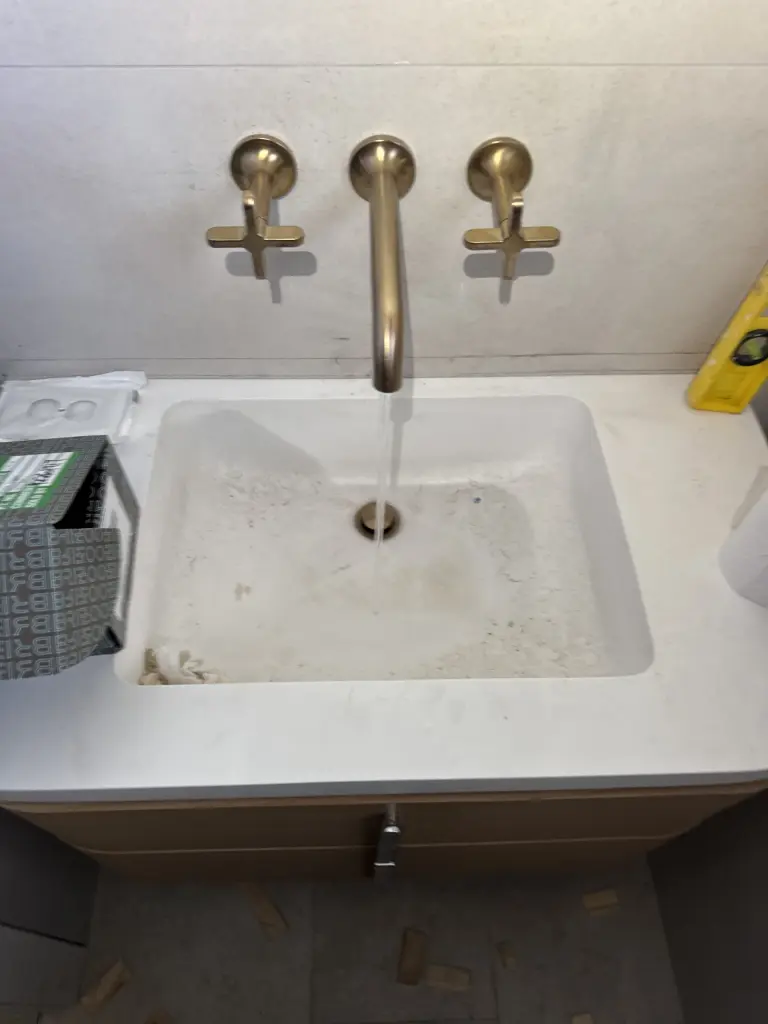

Plumber in San Jose, CA
Sewer laterals and cleanouts, drains, water heaters and tankless systems, repiping, leak detection, and gas work in a city where the pipe under one street has little in common with the next.
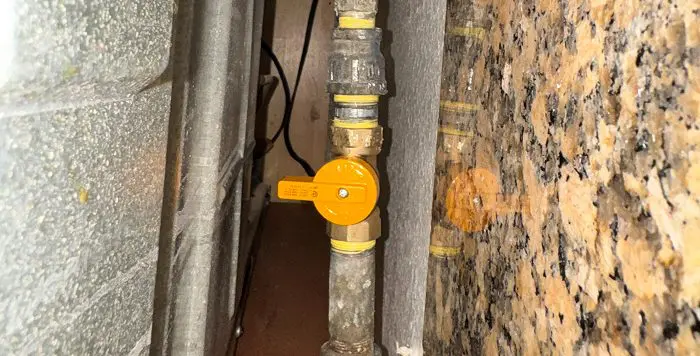
The South Bay Is Its Own Route
5-Star has been doing plumbing in Northern California since 2018, and San Jose runs on its own crews and its own schedule. Your job gets booked against South Bay work. What came south with us is the part that takes years to build: technicians who have spent that time under old houses and who can tell you in the first hour what the rest of the job looks like.
On a San Jose call we ask two things before anything else. Which company sends your water bill, and whether there is a cleanout at your property line. Both answers shape the job before we arrive, and one of them decides who pays for part of it.
What Plumbing in San Jose Actually Looks Like
Three Water Companies, and All of Them Deliver Hard Water
Three retailers serve this city. San Jose Water covers most of it. Great Oaks Water Company serves much of the south side. The City of San Jose runs its own Municipal Water System in North San Jose, Alviso, Evergreen, and the far south end. The city publishes a lookup tool if you are not sure which one is yours.
Which one you have changes the number, not the verdict. San Jose Water publishes hardness by source: 11 to 26 grains per gallon from valley groundwater, 5 to 12 grains from mountain surface water, and 4 to 9 grains from the imported supply. Anything above 7 counts as hard. Most of this city is drinking water at the top of that range or past it.
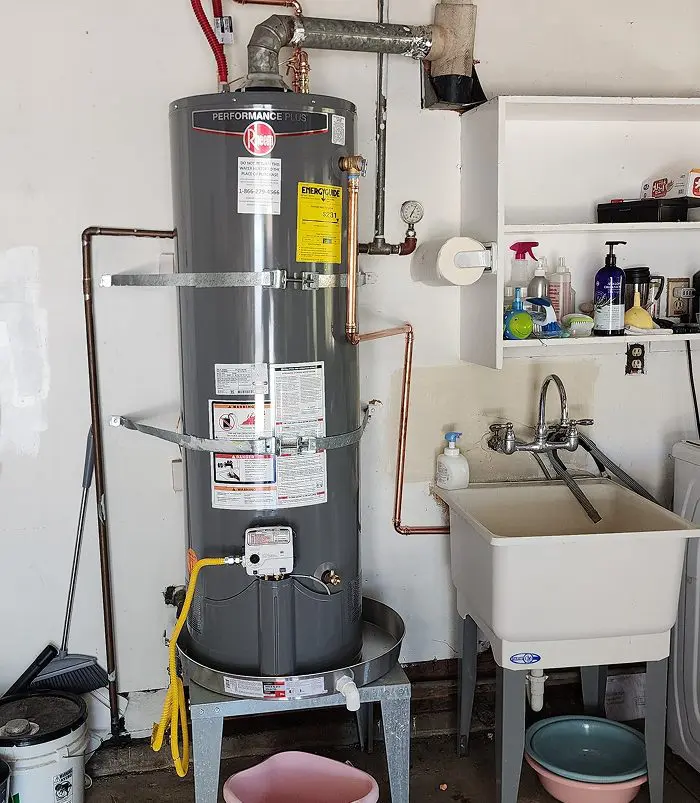
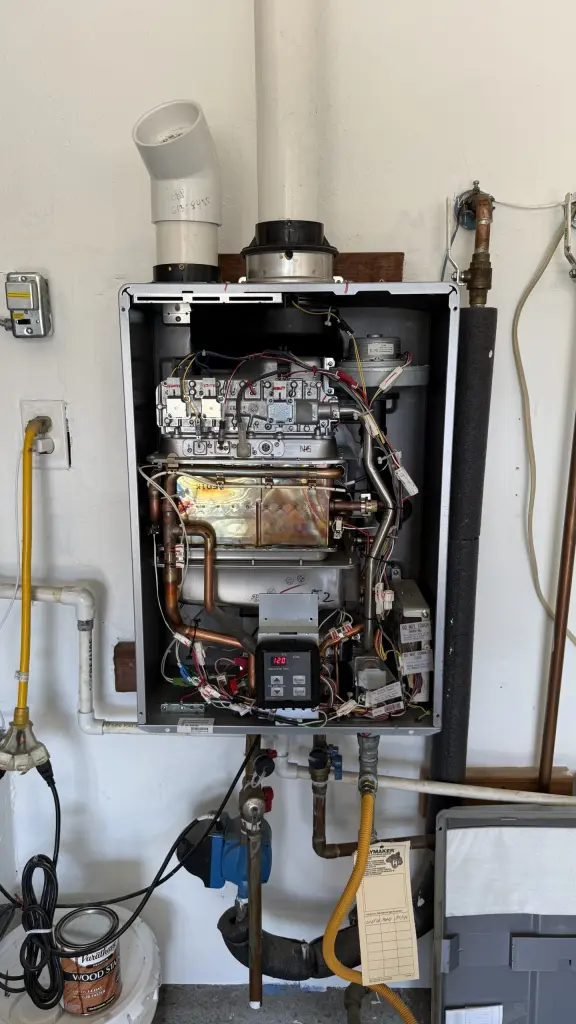
That is the main reason water heaters here rarely reach the age printed on the warranty. Mineral settles into the bottom of a tank and coats the heat exchanger inside a tankless unit. It shows up on the shower glass years before it shows up as a failure, and by the time a heater is rumbling, the layer has been building for a long time.
The Cleanout at Your Property Line Decides Who Pays
Your sewer lateral runs from the house out to the city main, and in San Jose the property owner is responsible for the whole thing. There is one exception worth knowing. If an approved wye cleanout is installed at the property line, the city will clear the lower section, from that cleanout out to the main, as a courtesy.
No cleanout, no courtesy. The entire run is yours, including the part under the sidewalk.
The city sets the details. The cleanout goes on your side of the line, within five feet of it, in an approved concrete box that opens. Installing one takes a plumbing permit, and the city requires one anyway whenever the building sewer is replaced or repaired at the property line. If you are already paying for lateral work, that is the moment to get it in.
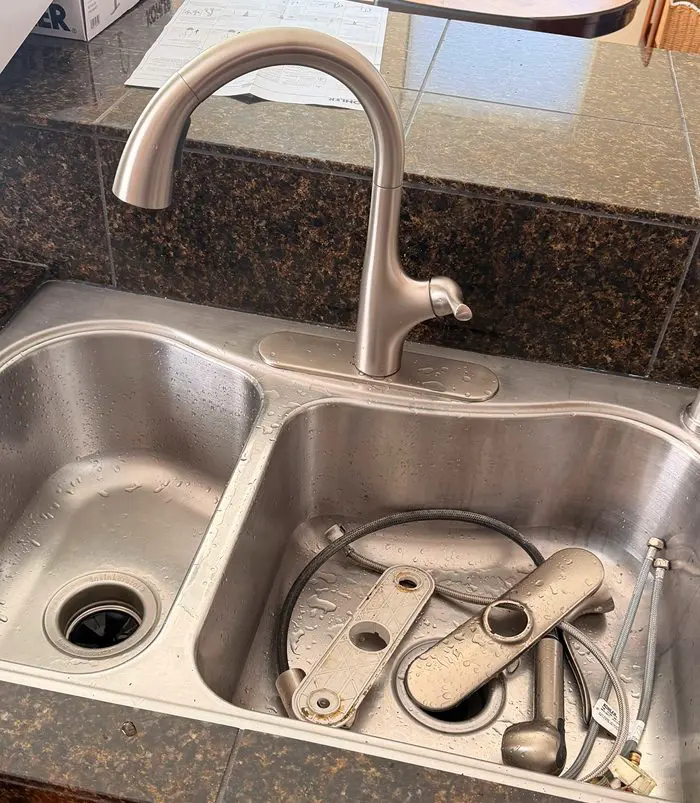
The Ground Moves Here, and Buried Pipe Moves With It
Much of the valley floor sits on expansive clay. It swells through a wet winter and shrinks through a dry summer, and it does that every year. Concrete does not argue with it, and neither does a sixty-year-old sewer lateral.
What that does to a buried line is slow and specific. Joints pull apart. Sections sag into low spots that hold water and debris. Upstairs the house shows nothing at all until a drain that behaved for years starts backing up twice a winter.
This is why a camera goes down the line before we quote a repair. Clay tile and cast iron laterals are still common in the older parts of the city, and the difference between a spot repair and a full replacement is usually a few feet of pipe that only the camera can find.
Your Pipes by Neighborhood Age
The pre-war core, downtown and around it (95110, 95112, 95113).
The oldest housing in the city, sitting on the oldest sewer. Vitrified clay laterals and galvanized supply lines both turn up here, and both are past their service life.
The 1920s to 1950s streets on the west side (95125, 95126, 95128).
Bungalows and early tract housing under mature street trees, on laterals that were never built to share ground with a root system that size.
The slab tracts of the 1950s and 1960s (95123, 95124, 95129, 95130).
Slab on grade, copper supply run under the concrete, cast iron drains. This is slab leak territory, and a few of these tracts have systems buried in the floor that nobody should be cutting into blind.
The newer east and north side (95121, 95131, 95132, 95134, 95138, 95148). .
Copper or PEX supply and plastic drains. The pipe is young. What brings us out is the water heater, the pressure regulator, and the expansion tank nobody has looked at since the house was built.
Plumbing Services in San Jose
Sewer Line Repair & Replacement in San Jose.
Sewer Cleanout Installation in San Jose.
Drain Cleaning in San Jose.
Water Heater Repair & Installation in San Jose.
Tankless Water Heater Installation & Service in San Jose.
Leak Detection in San Jose.
Whole-Home Repiping in San Jose.
Water Line Repair & Replacement in San Jose.
Gas Line Installation & Repair in San Jose.
Appliance Connections & Valve Replacement in San Jose.
San Jose Neighborhoods We Serve
San Jose spreads across close to thirty ZIP codes, and we work the whole city, from the pre-war streets downtown to the newest construction on the north and east sides.
Downtown and central (95110, 95112, 95113, 95126):
Downtown, Japantown, Naglee Park, College Park, the Rose Garden, Shasta Hanchett Park, Midtown
West and southwest (95117, 95118, 95124, 95125, 95128, 95129, 95130):
Willow Glen, Cambrian Park, Burbank, Winchester, West San Jose, Westgate
South (95111, 95119, 95120, 95123, 95136, 95138, 95139):
Blossom Valley, Almaden Valley, Santa Teresa, Edenvale, Seven Trees, Communications Hill, Silver Creek Valley
East (95116, 95121, 95122, 95127, 95135, 95148):
Alum Rock, East Foothills, Evergreen, Mount Pleasant, Brookwood Terrace
North (95002, 95131, 95132, 95133, 95134):
Berryessa, North San Jose, Alviso, the Oakland Road corridor
Nearby, we also serve Sunnyvale, Mountain View, and Los Gatos.


Why San Jose Calls 5-Star Plumbing
In-House Licensed Technicians.
Upfront Flat-Rate Pricing.
Expert Permit Management.
1-Year Labor Warranty.
San Jose Plumbing Questions
- Do I need a water softener in San Jose, or is there another way to protect my water heater?
No, a softener is not the only option, and it is not always the right first move. Flushing the tank on a schedule and keeping the anode rod in usable condition buy real time, and they cost a fraction of a treatment system. Softening makes the strongest case in a house that has already lost a heater early, is fighting scale at every fixture, or has a filtration setup it needs to protect. We will tell you which of those describes your house before you spend anything.
- My house is on a slab and has heating tubing in the floor. Does that change how you handle a leak?
Yes, it changes the first step. A number of mid-century slab houses here, including the Eichler streets in Willow Glen, have heating tubing cast into the concrete alongside the domestic water lines. Before anything gets cut, we establish which system is actually leaking, because the answer sends the job in two different directions. A leak in a domestic water line under a slab can often be rerouted overhead in PEX and the old section left abandoned in place. A leak in the in-floor heating loop is a heating system problem and has to be treated as one.
- There are big trees along my street and my main line keeps backing up. Do the trees have to come out?
No, usually not, and in many cases they are not yours to take out. Street trees in San Jose belong to the city, and removing one is a permit matter with the city rather than something a plumber decides. The good news is that the tree is rarely the thing that has to change. Roots do not break sound pipe, they follow openings that are already there, so the fix is the section of pipe that let them in. Cabling clears the backup for a season. Replacing that section is what ends the annual repeat.
- What does a San Jose inspector actually check on permitted work?
Three things, mostly: materials, depth, and a pressure test. On gas work the inspector watches an air test, and the piping has to hold at least 10 psi for a minimum of fifteen minutes with no drop on the gauge while they stand there. On sewer work the pipe has to be approved material, the building sewer has to sit at least twelve inches below grade, and nothing gets backfilled until it has been looked at. None of that is difficult on a job that was done properly. It is only a problem for contractors who were counting on nobody checking.
- I smell gas in the house. What should I do before I call a plumber?
Get everyone outside first, then make the call from outside. Do not flip light switches on or off, do not use the stove, and do not start a car in the garage. Once you are out, call PG&E at 1-800-743-5000 or call 911. They respond at no charge, shut the gas off at the meter, and make the property safe. We are called after that for the repair, the pressure test, and the permit. Nobody should be trying to trace a gas smell from inside the building.
One Address, One Straight Answer
Give us the address and tell us what the house is doing. We will work out whether you are looking at a lateral problem, a supply problem, or a water heater at the end of its run, and you will hear it from the person who did the diagnosis.