If You Smell Gas Right Now
- Leave the house. Take people and pets with you. Leave the door open behind you.
- Do not touch anything that can spark. No light switches, no appliances, no garage door opener, no phone calls inside. Do not start a car in the garage.
- Call from outside, well away from the house. Call 911 first. Then call PG&E at 1-800-743-5000 so the utility can shut off the gas and check the area.
- Do not go back in until the utility or the fire department says it is safe.
Once the gas is off and the area is safe, a licensed plumber finds the leak and repairs the line. That is where we come in.
Common Signs of a Gas Leak
- A rotten-egg or sulfur smell. Natural gas has no smell of its own. Utilities add an odorant called mercaptan so leaks can be noticed.
- A hissing or whistling sound near a gas appliance, the meter, or a gas line.
- Dead or yellowing grass or plants in a line across the yard, which can mark a leaking buried line.
- Bubbles in standing water or mud above the path of a gas line.
- A gas bill that jumps without a change in how you use your appliances.
- A stove flame that burns yellow or orange instead of blue, which can point to a combustion or supply problem.
- Headaches, dizziness, or nausea that ease when you leave the house. If anyone has these symptoms, get outside and call 911.
Not everyone can smell the odorant, and the smell can fade in some situations. A combustible gas detector near the furnace and water heater gives an extra layer of warning. It does not replace a carbon monoxide alarm, which you need as well.
Where Gas Leaks Usually Start
- Flexible appliance connectors behind a range or dryer, especially old uncoated brass ones.
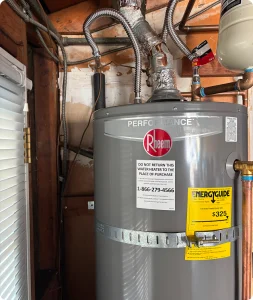
- Threaded joints and valves near the water heater and furnace.
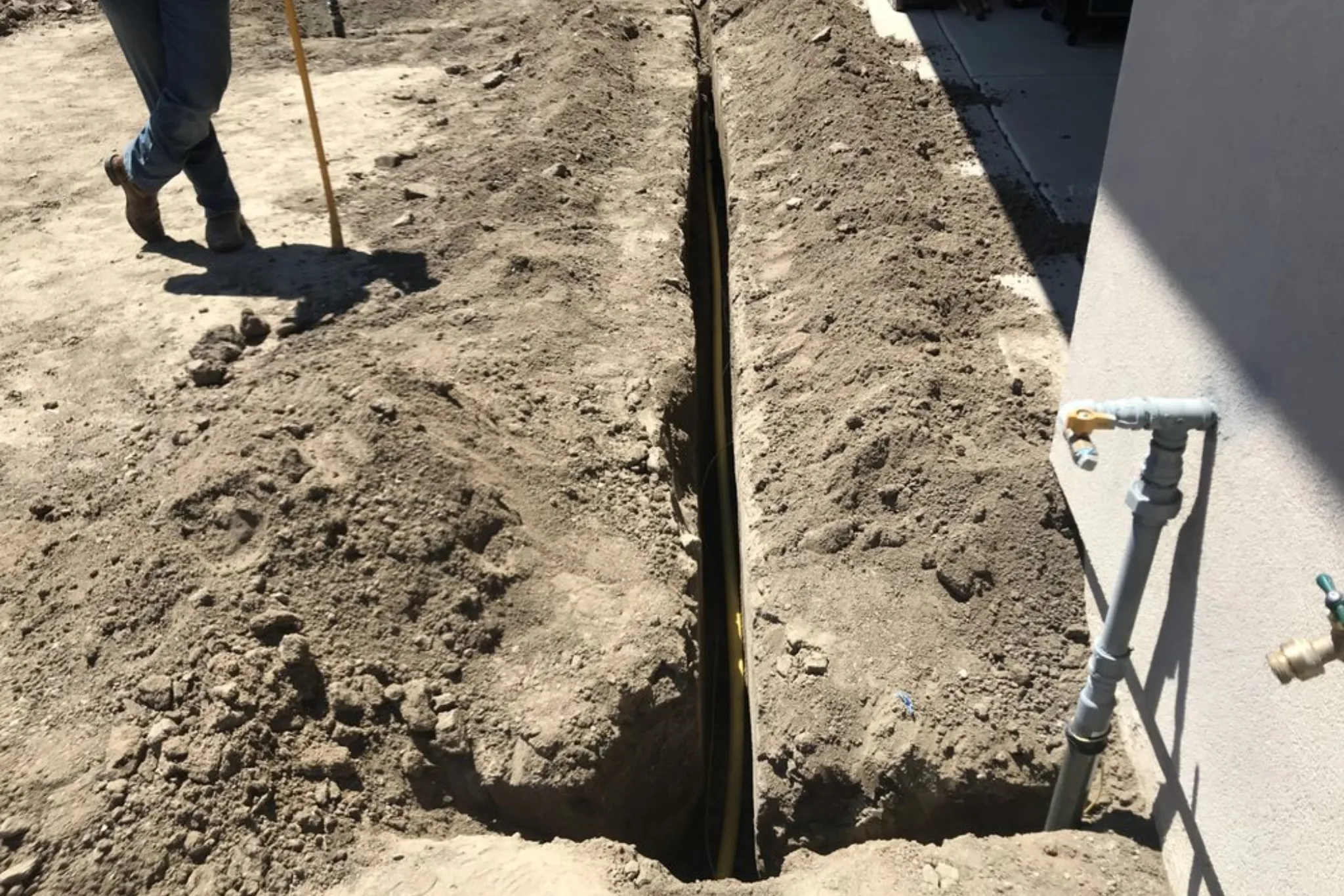
- Buried lines from the meter to a pool heater, BBQ, or detached garage, where older steel pipe corrodes in the soil.
- Lines damaged during digging, remodeling, or fence work.
What Happens After the Utility Shuts Off the Gas
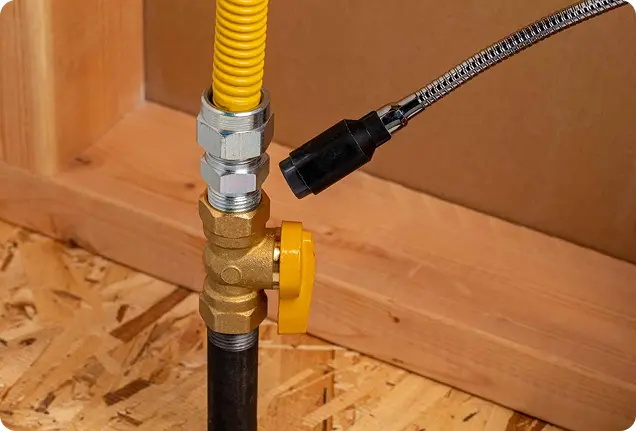
The utility makes the site safe, but repairs on your side of the meter are the homeowner’s responsibility. A licensed plumber then:
- Pressure tests the system to confirm there is a leak and find which section is losing pressure.
- Locates the exact spot with an electronic detector and soap solution on the joints.
- Repairs or replaces the damaged section. Gas line work in Sacramento County requires a permit, and the repair is pressure tested again before inspection.
- Coordinates the inspection, so the utility can turn the gas back on and relight the pilots.
Our team handles that sequence under CSLB #1038276. Learn more about our gas leak repair in Sacramento, or see our gas line installation and repair service if a section needs replacing.
Gas Leak Questions, Straight Answers
Should I call a plumber or PG&E first?
Call 911 first if you smell gas, then PG&E at 1-800-743-5000. They shut off the supply and make the area safe. Call a licensed plumber after that to find and repair the leak on your side of the meter.
Can I find a gas leak with soapy water?
Yes, on a joint you can see and reach, once you are sure gas is not building up in the room. Brush soapy water on the fitting and watch for growing bubbles. Do not use it as a reason to stay inside while you smell gas, and never use a flame to check.
Is a faint gas smell near the water heater normal?
No, it is not. A brief whiff when a burner lights can happen, but any smell that lingers near a gas appliance needs to be checked.
Do gas line repairs need a permit?
Yes, they do. Repairs and new gas lines require a permit and a pressure test, and the inspector signs off before the gas is restored.
Related Guides
Need a Gas Line Repaired?
Once the area is safe, call us. We locate the leak, repair it, and handle the permit and the inspection.