

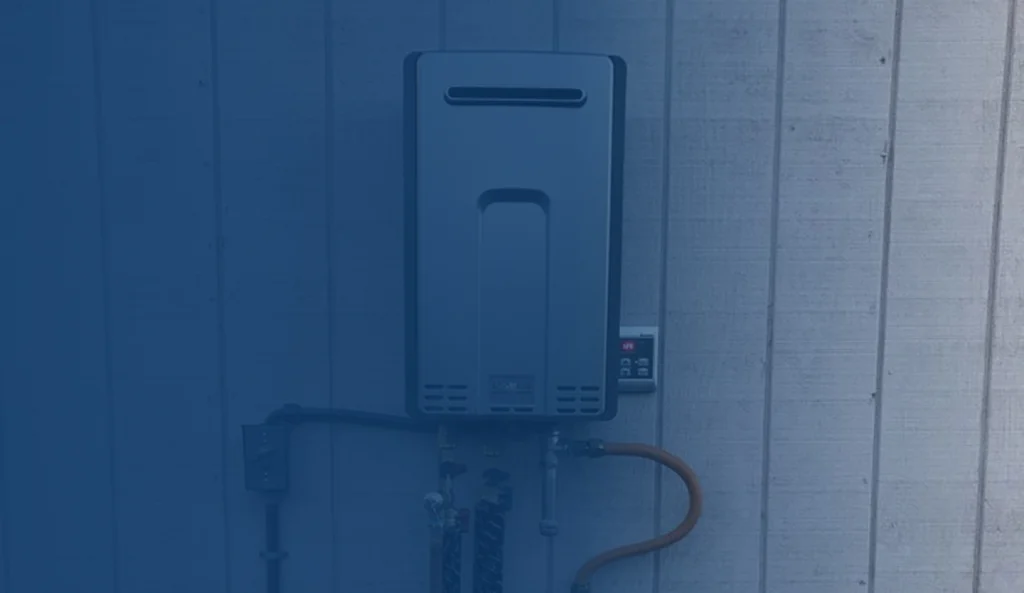

Water Softener Installation in Sacramento County
Hard water leaves its signature everywhere: white crust on the aerators, spots on glassware that survive the dishwasher, soap that will not lather, and a water heater that gives up years before it should. 5-Star Plumbing Inc installs the softener you choose, ties it into your main line properly, and tests the whole system before we leave.



What Hard Water Is Doing to Your Home Right Now
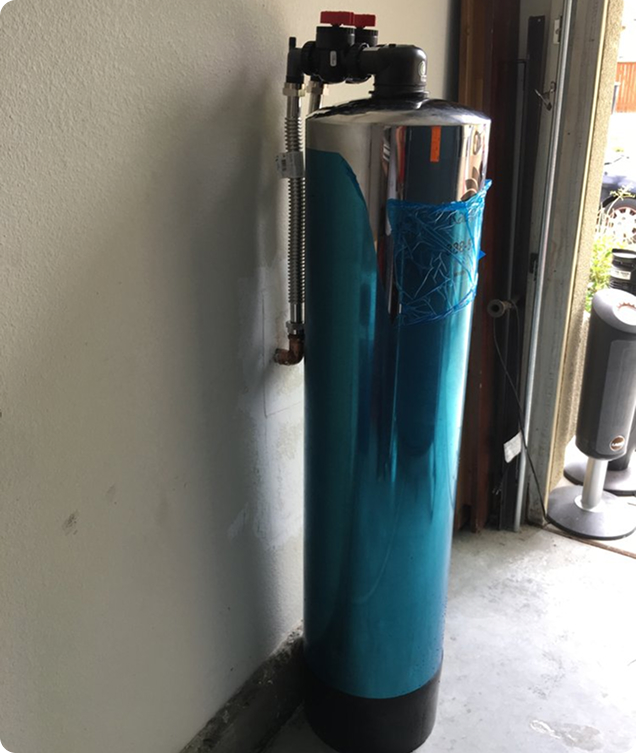
Hardness across Sacramento County is not one number. Utilities blend river water with groundwater, and groundwater carries far more calcium and magnesium, so the same provider can deliver softer water one season and hard water the next. Sacramento Suburban Water District tells its own customers exactly that. The City of Sacramento’s 2025 water quality report puts the spread in numbers: hardness measured in the distribution system ran anywhere from 0.9 to 9.0 grains per gallon. Homes supplied mainly from wells sit at the top of that range, and those are the ones where scale shows up first.
The minerals are not a health concern. The cost is mechanical. Scale plates out on every heated surface and inside every narrow passage in the house: the bottom of the water heater tank, faucet cartridges, shower heads, and appliance valves. You do not need a test kit to find out where your home sits on that range. It shows up like this.
- Chalky white residue on faucets, shower doors, and kettles
- Spotted glassware and dishes straight out of a running dishwasher
- Soap and shampoo that need more product for less lather
- Stiff laundry and towels that lose softness quickly
- Dry, tight feeling skin after a normal shower
- A water heater that failed well before the end of its warranty
Softening will not clear the buildup already in your pipes, but it stops the next decade of it. The number to size the system to is your provider’s published hardness for your address, not a regional average.
You Choose the Equipment. We Handle the Installation.
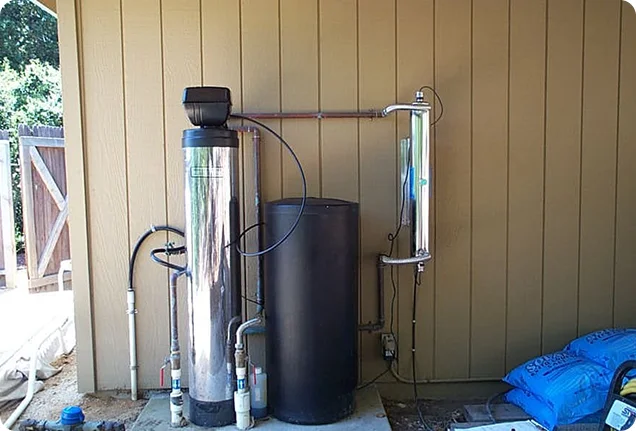
We are a plumbing contractor, not an equipment dealer. We do not sell softeners, we do not carry a product line, and we earn nothing on the unit itself. What that means for you is simple: any advice we give about sizing or placement is about your house, not about moving inventory.
Buy the system you want from the retailer or supplier you prefer, and we install it correctly. If you are not sure what to buy, tell us your household size and your water source during the estimate and we will explain how grain capacity, regeneration cycle, and physical footprint should line up with your home. You take that information wherever you shop.
What Our Installation Covers
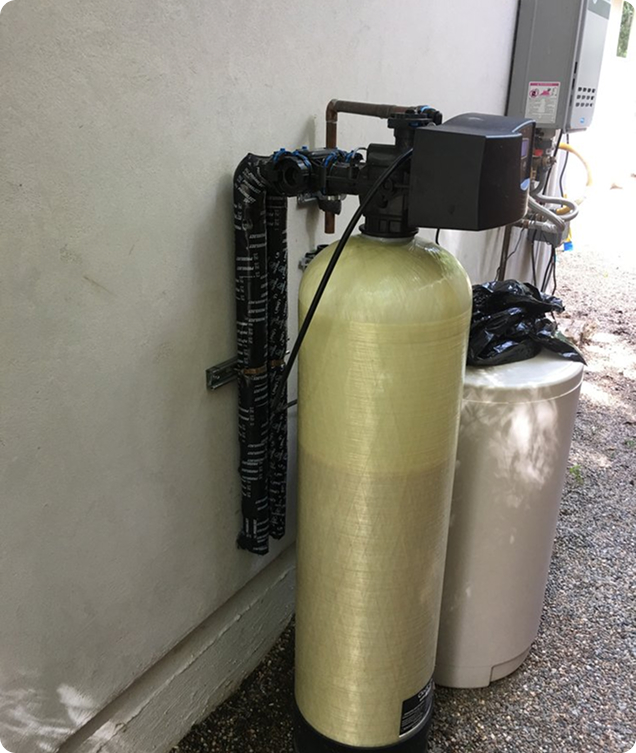
- Site assessment. We confirm where the main line enters, whether your home has a pre-plumbed softener loop, and where the unit can physically live.
- Tie-in to the main. If a loop exists we connect to it. If it does not, we cut in a new one so the softener treats the whole house and not just half of it.
- Bypass valve installed. You can take the unit offline for service or for filling a pool without shutting down water to the house.
- Drain line with a proper air gap. Regeneration discharge has to reach an approved drain without any chance of back siphoning. This is the step most rushed installs get wrong.
- Brine line run and connected, with the brine tank positioned where you can actually reach it to add salt.
- Power confirmed. The control head needs a standard outlet within reach, and we verify that before we start rather than after.
- Pressure test, programming, and first regeneration. We set the head to your hardness level and run the cycle with you there.
- Walk-through. Bypass operation, salt type and refill interval, and what a normal regeneration sounds like at two in the morning.
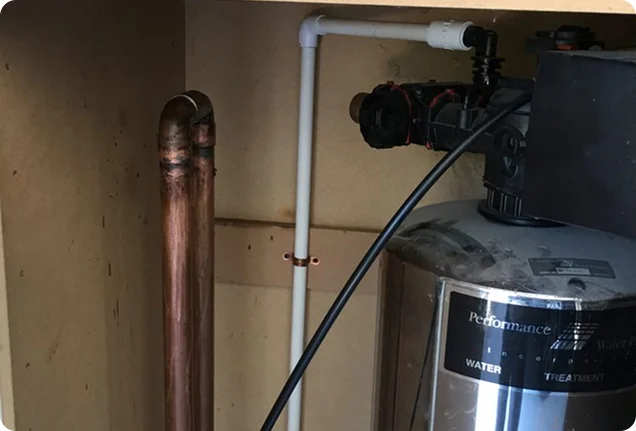
Where the Softener Goes
In most Sacramento County homes the answer is the garage, on the wall where the main supply enters, close to the water heater and within reach of a drain and an outlet. Homes built in the last twenty five years often have a capped softener loop already waiting there.
Older homes and homes on slab without a garage take more planning. The unit has to sit downstream of the main shutoff and upstream of the water heater, near a drain that can accept regeneration discharge, with enough clear floor for the brine tank and enough room to lift a forty pound bag of salt over it. During the free estimate we walk the space with you and confirm the location before anyone commits to a purchase. If the only workable position needs a new drain or a new outlet, you hear that at the estimate, not on install day.
Why Homeowners Choose 5-Star for the Install

In-House Licensed Technicians

Upfront Flat-Rate Pricing

Local Requirements Checked First

1-Year Labor Warranty


Financing & Referral Program

Flexible Payment Options


Our Referral Program
Flexible Payment Options
Softener Installation Questions, Answered
- Can you replace an old softener that is already in the house?
Yes, we can. We disconnect and remove the failed unit, inspect the existing tie-in, bypass, and drain, and reuse what is still sound. Older connections frequently need updating, and you will hear about that at the estimate rather than mid-job. The old unit and brine tank leave with us.
- Do I need a permit to install a water softener?
It depends on your jurisdiction. Requirements differ across the cities in Sacramento County, so we confirm with the local Building Division before the job rather than assuming. If a permit is required, we file it under our license.
- How long does installation take?
Three to five hours for a home with an existing softener loop. Cutting in a new tie-in, running a new drain line, or working in a tight crawlspace can extend that into a full day.
- Will a softener make my water taste better?
Not necessarily. Softening is ion exchange: it takes calcium and magnesium out so scale stops forming. Taste and odor come from other things, most often chlorine used in municipal treatment. If taste is your main complaint, tell us at the estimate so we can point you to the right equipment before you buy.
- Will my water feel different?
Yes, it will. Softened water rinses soap more completely, which most people describe as a slippery feeling in the shower. The sensation fades within a week or two. The reduced soap and shampoo use does not.
- Do I have to add the salt myself?
Yes, you do. Most households refill the brine tank every four to eight weeks depending on size and water use. We show you the correct salt type and the fill line during the walk-through.
- Is softened water safe to drink if I am watching my sodium?
For most people, yes. Ion exchange trades hardness minerals for a small amount of sodium, and the amount depends on how hard your incoming water is. If anyone in the household is on a medically restricted sodium diet, the usual solution is a separate unsoftened or filtered tap at the kitchen sink, and we can plumb one during the same visit.
- Should I replace my water heater at the same time?
If yours is already near the end of its life, yes, and the sequencing matters. A new tank installed after the softener is online starts clean and stays that way. Doing both in one visit also means one trip charge instead of two. See water heater replacement.
How the Job Runs
Free assessment
You buy the unit
Flat-rate installation quote
Install day
Walk-through and warranty
Stop Paying for Hard Water Every Month
Book a free assessment anywhere in Sacramento County. We will confirm placement, size the system for your household, and give you a flat installation price before you buy anything.