

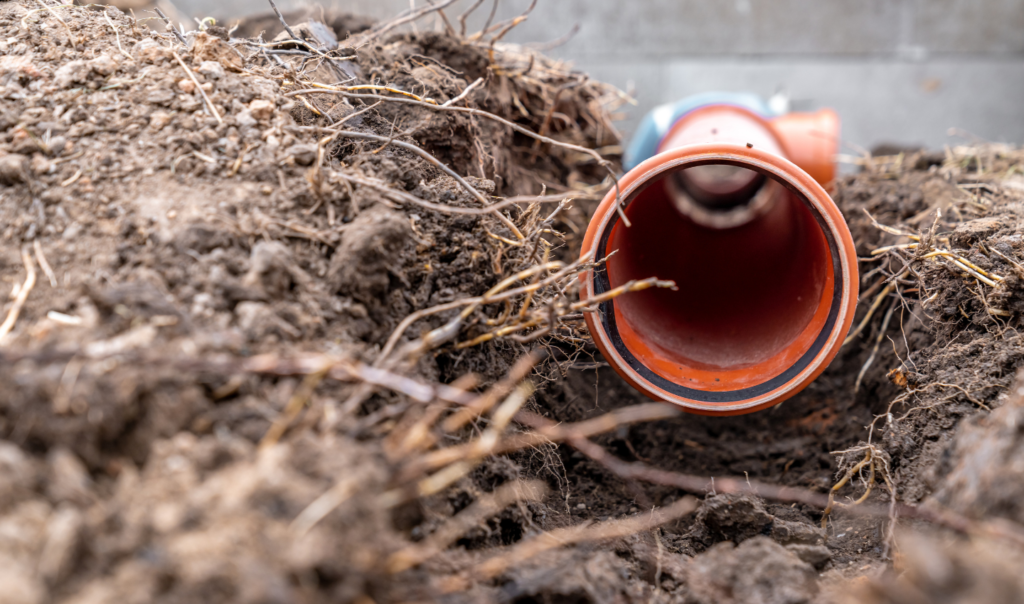

Sewer Line Replacement in Sacramento County
Some sewer lines are worth repairing. Others have been cabled, jetted and patched so many times that every fix only buys a few more months. When the camera shows a line that is failing along its length, 5-Star Plumbing Inc replaces it, trenchless where the ground allows and by open trench where it does not. We hold CSLB license #1038276 (B and C36), pull the permits, and do the job with our own crews, from the first camera pass to the city inspection.


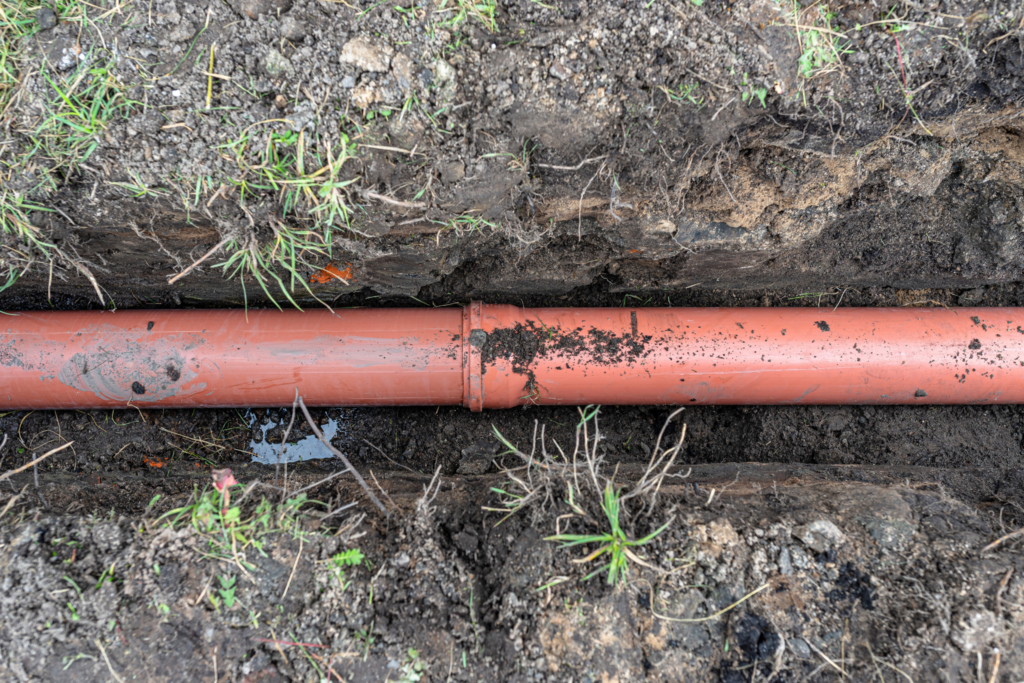
When a Repair Will Not Hold: Signs the Line Needs Replacing
A single crack or one root-filled joint is a repair. Replacement makes sense when the problem is the pipe itself. These are the signs we look for on camera and inside the house:
- Backups that come back within weeks of cabling or jetting, no matter how often the line is cleared.
- Root intrusion at joint after joint, not just at one spot near a tree.
- Cracks, offset joints or sagging (bellied) sections along a long stretch of the line.
- Clay or cast iron pipe from the 1950s to 1970s that is scaling, flaking or starting to collapse.
- Sewage odor or soggy ground over the line that returns after an earlier repair.
- Two or more spot repairs already done on the same lateral.
Sacramento’s clay-heavy soil shifts with every wet winter and dry summer, and mature trees send roots into every gap they find. Once an old line is failing in several places, fixing it one section at a time costs more than replacing it once. If the camera shows damage in one place only, a targeted sewer line repair is usually the better answer, and we will tell you so.
Two Ways to Replace a Sewer Line. One Saves Your Yard
Not every sewer line replacement requires digging a trench across your property. Trenchless technology lets us replace the entire line through small access points — keeping your lawn, driveway, and landscaping intact. Here’s how the two approaches compare:
Feature
Trenchless (Pipe Bursting)
Traditional (Open Trench)
What to Expect — From Camera to Completion
A sewer line replacement sounds disruptive, but with the right crew and the right method, most Sacramento homeowners are back to normal within a day or two. Here’s how we work:
Sewer Camera Inspection
Diagnosis & Method Selection
Flat-Rate Quote
Permits & Utility Locates
Replacement & Testing
Surface Restoration & City Inspection
Why Sacramento Homeowners Trust Us With Their Sewer Lines
Camera-First Diagnosis
Trenchless Capability
Upfront Flat-Rate Pricing
Full Permit Management


Financing & Referral Program

Flexible Payment Options



Our Referral Program
Flexible Payment Options
Sewer Line Replacement Questions, Straight Answers
- Can't you just repair the damaged section instead of replacing the whole line?
Often, yes. If the camera shows one cracked joint, one root-filled section or a single offset, a spot repair fixes it for a fraction of the cost. That work is covered on our sewer line repair page. Replacement is the right call when the damage runs along the line, when the same line has already been repaired more than once, or when the pipe material itself is breaking down. When both options are realistic, we show you the footage and quote both.
- What causes main sewer lines to fail in Sacramento?
Three things, mostly: tree root intrusion (roots seek out the moisture in sewer joints), Sacramento’s clay-heavy soil shifting and cracking old pipes, and age — clay and cast iron lines from the 60s and 70s simply reach the end of their lifespan. Orangevale root intrusion and older homes in Carmichael and Arden-Arcade are where we see the most failures.
- What is trenchless sewer replacement, and does it work for every situation?
Trenchless means we replace the pipe without digging a full trench across your yard. We use pipe bursting (pulling a new HDPE pipe through the old one, breaking it apart) or CIPP lining (curing a resin-coated liner inside the existing pipe). It works for most residential lines, but not all — if the pipe has completely collapsed or has too many sharp bends, traditional excavation is the safer option. The camera inspection tells us which method fits.
- How long does a sewer line replacement take?
Trenchless replacements are usually completed in a single day. Traditional excavation takes 2–4 days depending on depth, length, and whether the line runs under a driveway or sidewalk. We’ll give you a specific timeline after the camera inspection.
- Will you need to dig up my driveway or sidewalk?
With trenchless methods, usually not. We only need small access pits at each end of the line. If the line runs directly under a driveway or sidewalk and traditional excavation is required, we include surface restoration in the quote — you’ll know the full cost before we start.
- Do I need a permit for sewer line work?
Yes. Sacramento County requires permits for any sewer line repair or replacement. If the line crosses a public sidewalk or right-of-way, additional city encroachment permits may be needed. We pull all permits, schedule the inspection, and deliver the documentation to you.
- What is a camera inspection, and do I get to see it?
We feed a waterproof fiber-optic camera through your sewer cleanout and record video of the entire line. You watch the footage with us in real time — we show you exactly where the problem is, what caused it, and what the pipe looks like upstream and downstream of the damage.
- How much does a sewer line replacement cost?
It depends on the length of the line, the depth, the method (trenchless vs traditional), and whether any surface restoration is needed. We quote flat-rate after the camera inspection — the number you approve is the number you pay. No hourly billing, no change orders.
- Can tree roots come back after a sewer line replacement?
Not with a properly installed new line. HDPE pipe (used in trenchless replacement) is seamless — there are no joints for roots to penetrate. Traditional replacement with properly sealed PVC joints also resists root intrusion. The old clay and cast iron joints were the problem — modern materials eliminate it.
Sewer Backing Up? Don’t Wait for the Next Flush.
Call us 24/7 for an emergency camera inspection, or request a quote online — same-day service across Sacramento County.