


Kitchen Plumbing Installation & Repair in Sacramento County
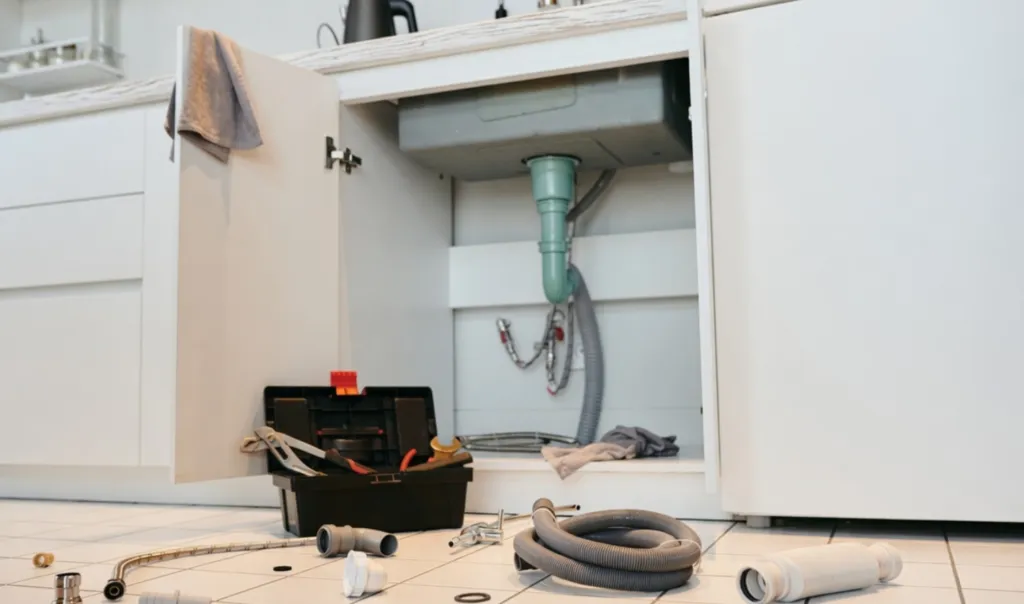
Your kitchen handles more plumbing than any other room in the house — three meals a day, a dishwasher cycle every evening, and a garbage disposal that never gets a break. When something leaks, clogs, or stops working, it disrupts the entire household routine. 5-Star Plumbing Inc installs, replaces, and repairs every plumbing component in your kitchen — from the faucet you see to the angle stops and supply lines you don’t. CSLB #1038276, licensed since 2018.
Kitchen Plumbing Problems You Shouldn’t Ignore
Some kitchen plumbing issues are obvious. Others hide under the sink for months, quietly damaging your cabinets and subfloor. Here’s what to watch for:
- A dripping faucet that wastes water and drives up your bill — even a slow drip adds up to hundreds of gallons a year.
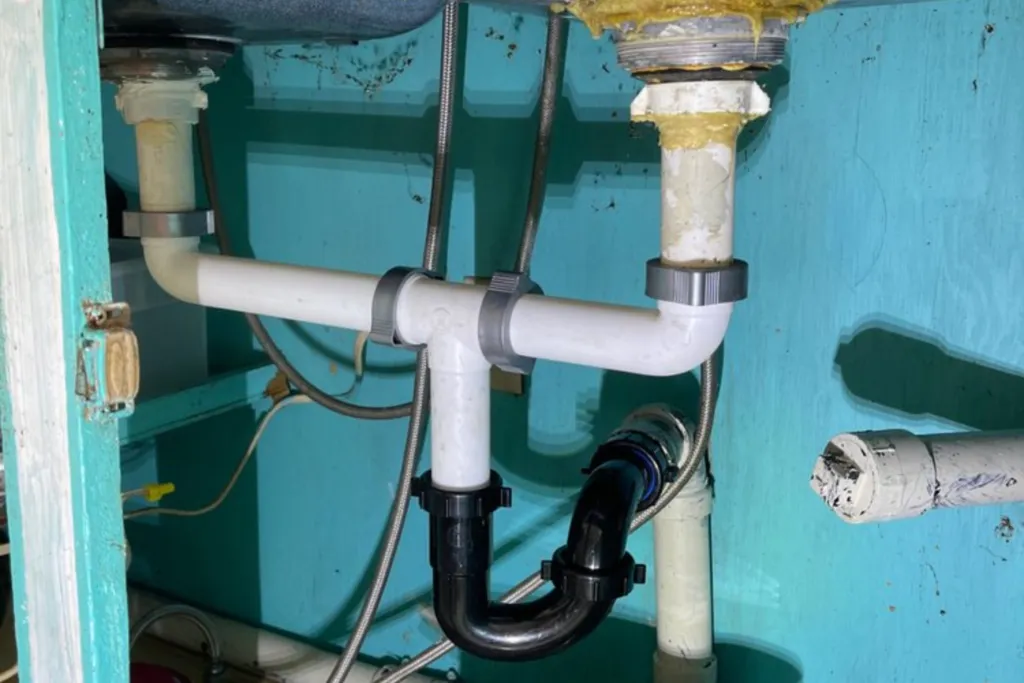
- Water pooling under the sink — a failing P-trap, loose connection, or cracked supply line leaking onto the cabinet floor.
- A garbage disposal that hums but won’t spin, jams constantly, or leaks from the bottom.
- Dishwasher not draining properly or leaking at the supply connection.
- Low water pressure at the kitchen faucet — often caused by a clogged aerator, failing angle stop, or corroded supply line.
- Discolored or bad-tasting water — Sacramento’s hard water affecting your drinking water quality.
- A slow kitchen drain that backs up during heavy use.
The area under your kitchen sink is one of the most damage-prone zones in the house. A small leak on a supply line or P-trap can ruin the cabinet base, warp the subfloor, and create mold conditions — all before you notice a puddle. If anything looks wet or smells musty under there, call before the damage spreads.
Everything Your Kitchen Needs — Installed Right the First Time
We handle the full range of kitchen plumbing — from a 20-minute faucet swap to a complete under-sink rebuild during a remodel.
Kitchen Sink Installation & Replacement
Kitchen Faucet Installation
Garbage Disposal Replacement & Installation
Dishwasher Installation & Hookup
Reverse Osmosis System Installation
Ice Maker Box & Supply Line Installation
The Parts You Don’t See Are the Ones That Fail First
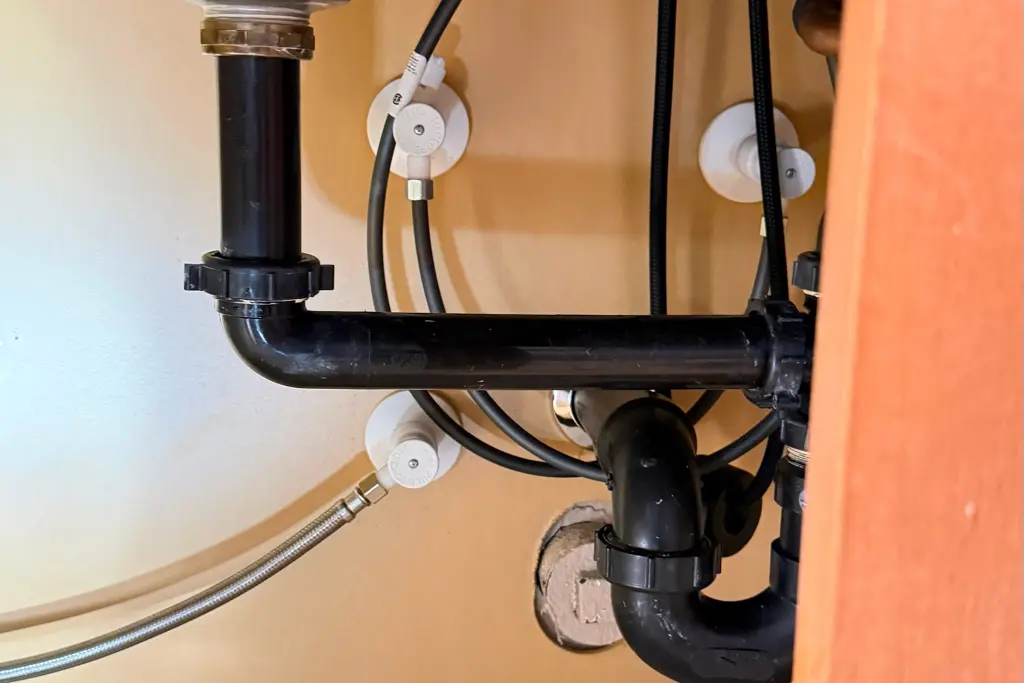
Most kitchen plumbing emergencies don’t start at the faucet — they start under the sink, where aging components quietly deteriorate. Here’s what’s down there and why it matters:
P-Trap (1-1/2”)
The curved pipe under your sink that holds water to block sewer gas from entering your home. Over time, P-traps crack, corrode, or develop leaks at the slip-joint connections. A failing P-trap is one of the most common sources of under-sink water damage.
Angle Stop Valves
The small shut-off valves on the wall that control water flow to your faucet and dishwasher. Original angle stops from the 80s and 90s corrode and seize — meaning when you need to shut off water in an emergency, the valve won’t turn. We replace them with modern quarter-turn ball valves that work every time.
Supply Lines
The flexible hoses connecting the angle stops to your faucet. Older chrome or plastic supply lines become brittle and can burst without warning — flooding the cabinet and the floor below. We replace them with braided stainless steel lines rated for decades of service.
When we’re already under your sink for a faucet or disposal job, we inspect these components and let you know if anything is due for replacement. A $30 supply line swap during an existing service call is a lot cheaper than a $3,000 water damage claim six months later.
What to Expect — Quick, Clean, Done Right
Assessment
Flat-Rate Quote
Installation
Cleanup & Walkthrough
Why Sacramento Homeowners Trust Us With Their Kitchen
We Install What You Buy
Upfront Flat-Rate Pricing
Under-Sink Inspection Included
In-House Technicians Only


Financing & Referral Program

Flexible Payment Options



Our Referral Program
Flexible Payment Options
Kitchen Plumbing Questions — Straight Answers
- Can you install a faucet I already bought?
Yes. We install fixtures from any brand and any retailer — Home Depot, Lowe’s, Amazon, Costco, a plumbing showroom, wherever. Just make sure you have the faucet on-site before we arrive so we can confirm it’s compatible with your sink.
- How long does a kitchen faucet installation take?
A straightforward faucet swap takes about 30–60 minutes. If we’re also replacing supply lines and angle stops underneath, add another 20–30 minutes. We’ll give you a time estimate when we quote the job.
- Is a garbage disposal hard to replace?
Not for us — it’s one of the most common jobs we do. We disconnect the old unit, install the new one, connect the drain and electrical, and test it. The whole job typically takes under an hour. If you don’t have a disposal yet, we can supply and install one.
- Do I need a reverse osmosis system if I have hard water?
A reverse osmosis system filters your drinking water at the point of use — removing minerals, chlorine, and contaminants that affect taste. It won’t soften all the water in your house (that’s a water softener’s job), but it gives you clean, great-tasting water from a dedicated faucet at your kitchen sink. For Sacramento’s hard water, it’s one of the most popular upgrades we install.
- How do I know if my angle stops need replacing?
Try turning them. If the valve handle is stiff, won’t turn at all, or drips when you operate it, it’s corroded and due for replacement. Original angle stops from the 80s and 90s are the most common failures we see in Sacramento kitchens. We replace them with quarter-turn ball valves that shut off reliably every time.
- Can you hook up my new refrigerator’s ice maker?
Yes. We install a dedicated water supply line and an ice maker box with a shut-off valve behind the refrigerator. This is code-compliant, accessible, and prevents the slow leaks that happen when people use saddle valves or self-piercing connectors.
- What if I’m doing a kitchen remodel — can you handle all the plumbing?
Yes. We rough in new supply and drain lines, relocate plumbing for new layouts, install sinks, faucets, disposals, dishwashers, and filtration systems. We coordinate with your general contractor or work directly with you if you’re managing the project yourself.
- Should I replace my supply lines if they look fine?
If they’re the original chrome or plastic lines that came with the house, yes. These materials become brittle over time and can burst without warning. Braided stainless steel supply lines are inexpensive, last decades, and are the single best way to prevent a kitchen flood. We replace them during any under-sink job for a minimal added cost.
Kitchen Plumbing Problem? We’ll Handle It.
Call us for same-day kitchen plumbing service, or request a quote online.